
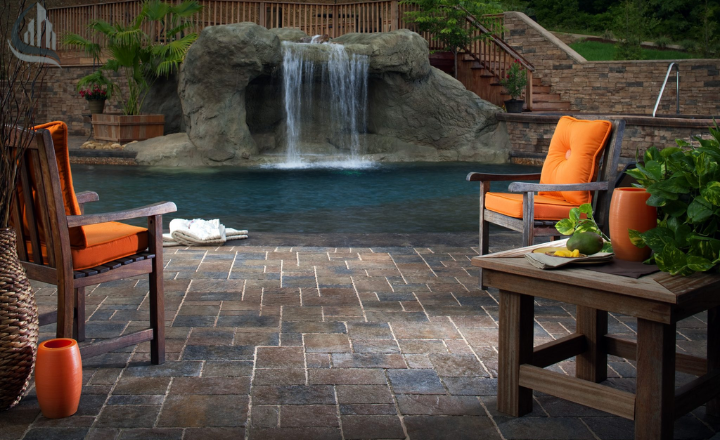
Designing a landscape without plants can be surprisingly refreshing. Instead of juggling watering schedules and seasonal upkeep, you get the freedom to focus on materials, shapes, and textures that stay beautiful all year long. A plant-free outdoor space can look just as inviting as a traditional garden when the design feels intentional and well-balanced.
12 inspirational ways to landscape without plants
In a plant-free landscape, furniture becomes the centerpiece of your design. Choose pieces with bold colors, unique shapes, or eye-catching details to instantly draw attention. For example, a vibrant dining set or a statement lounge chair can transform a simple patio into a stylish outdoor room.
Consider angles and sight lines when arranging furniture, ensuring every corner feels inviting and functional. Durable materials like teak, metal, or weather-resistant resin will keep your furniture looking great year-round.
1. Make furniture the focal point rather than plants
In a plant-free landscaping design, outdoor furniture becomes the star of the show. Choose pieces that boast bold colors or unique styles to draw the eye and create a statement. For example, vibrant chairs or a striking dining set can instantly liven up a space.
When placing lounge pieces, think about angles and sight lines that capture attention. A cozy nook with stylish cushions can invite relaxation, while a sleek table set near a focal wall adds functionality. Opt for durable materials that can withstand the elements, ensuring your furniture remains a highlight throughout the seasons.
2. Keep things streamlined and minimal
A garden without plants can be both stunning and functional. Think clean lines and modern shapes. Use concrete pathways, gravel, or pavers to create a sleek layout. Keep the design simple; avoid clutter with just a few select features like benches, sculptures, or raised beds without the fuss of plants.
To make your space inviting, choose a limited color palette. Neutral tones mixed with a splash of bold color in furnishings. By reducing unnecessary elements, you can create an organized outdoor space that feels open and breezy.
3. Go plant-free in small spaces
Designing small patios, balconies, or yards without plants can sparkle with creativity. Start with layered textures; think about using outdoor rugs, wooden decking, or stone tiles . Using furniture with clean lines can help the space feel open. Opt for a compact dining set or stylish lounge chairs.
Incorporate decorative elements like outdoor lighting, mirrors, or wall art to enhance balance and add character. Remember, choosing a limited color palette helps maintain cohesion, making your space feel curated rather than chaotic.
4. Choose an eye-catching focal point in your landscaping
In no-maintenance front yard landscaping, choosing an eye-catching focal point is key to creating a balanced and stylish outdoor space. Add a unique sculpture or a beautifully designed water feature. These elements can anchor your yard, providing both charm and interest without the fuss of traditional gardens.
Pay attention to proportion and select features that suit the size of your yard. A large stone bench can complement a sprawling area, while a delicate birdbath might shine in a smaller setting.
5. Mix materials to keep hardscaping interesting
Combining surfaces like stone, wood, gravel, and concrete adds rich texture and depth, making your space visually exciting. For instance, a sleek concrete path can contrast beautifully with rough gravel, while wooden benches provide warmth.
When picking materials, think about color and pattern coordination. Earthy tones in stone and gravel can harmonize with the natural hues of wood, creating a cohesive look. Use different textures, like smooth stone against coarse gravel, to define zones in your garden.
6. Opt for a color palette as you would for planting
Creating a compelling garden color palette doesn’t just apply to plants; it extends to your hardscape and decor as well. When designing a plant-free landscape, think of how colors will interact with one another. For instance, if you choose a warm terracotta for your patio, pair it with neutral furniture or cool teal accents.
Surface tones play a significant role in visual appeal. Think about using light shades for larger areas to make the space feel expansive and inviting. Conversely, darker colors can ground your design, providing balance. Use decorative elements like cushions, pots, or outdoor art.
Read more about the best flowers to grow in a garden.
7. Swap plants for paint to introduce bold color
When you’re looking to brighten your outdoor space, consider swapping traditional plants for vibrant paint. Bold colors on your walls, fences, or even pavement can add a striking touch to your landscape. A bright blue or sunny yellow wall can serve as an eye-catching focal point.
Using landscaping paint ideas is not just practical; it’s also an invitation to get creative. Think about how you can play with color combinations, like pairing a vivid red fence with neutral furniture. You can even use painted surfaces to mimic natural shapes, like wavy lines or geometric patterns, which can echo plant forms.
8. Introduce a modern water feature
Introducing a modern water feature can transform your outdoor space into a serene retreat. Go for sleek fountains, elegant reflecting pools, or minimalist water trays. These landscaping water features create a calming atmosphere, where the gentle sound of water softens the air.
When planning your fence backyard water feature, consider placement carefully. Scale is important too; a larger fountain can make a bold statement, while smaller elements are perfect for subtler spaces. Choose materials like concrete or natural stone for a cohesive look that complements your overall design.
9. Use decorative screens with plant motifs
Decorative screens with plant motifs can transform a plant-free landscape into a vibrant and inviting space. These outdoor screen panels offer more than just privacy; they introduce texture and visual interest. With intricate patterns inspired by nature, you can create an illusion of greenery and softness.
Choosing privacy screens with leaf or floral designs can draw the eye and give your area a sense of depth. They can divide spaces, shield you from neighbors, or create a cozy retreat, all while enhancing the overall aesthetics.
10. Go for an interesting mix of colors and materials
To create a captivating outdoor space, think beyond the usual greenery. Go for an interesting mix of colors and materials to define areas and make your landscape design pop. Start by layering textures. Combine smooth stone pavers with rough timber decking for a striking contrast. Adding gravel pathways can break up larger areas.
Next, play with colors. Choose warm earth tones to evoke a cozy feel, and mix in vibrant hues for visual interest. A sandy beige can be paired with deep charcoal to highlight features. These combinations don’t just create beauty; they add depth. By carefully selecting landscaping materials and colors, your outdoor area becomes more than just a yard.
11. Mix in some sculpture to add interest
Sculptures, statues, or unique art pieces create stunning focal points that draw the eye and spark conversation. For example, a sleek metal statue pairs beautifully with stone pathways, while a weathered bronze piece adds warmth to a modern setting.
Placement matters too. Position your sculptures where they can be easily seen, like at the entryway or along a path. This not only directs visitors around your yard but also highlights your chosen pieces. Aim for varied heights and textures; these will create visual interest and depth in your plant-free landscape.
12. Make a pool the centerpiece of a plant-free scheme
A pool can be a stunning centerpiece, even in a plant-free yard. To make the most of it, consider placing the pool centrally in your space. Surround the pool with natural stone or sleek concrete to create an inviting atmosphere. These materials not only look great but also require minimal upkeep.
Add features like decorative stones, gravel paths, or stylish outdoor furnishings to enhance the ambiance. Furniture in muted tones can create a soothing environment, while bright cushions can add a pop of color without the need for plants. Think about incorporating a simple water feature, like a small fountain or waterfall.
13. Incorporate outdoor lighting to enhance the mood
Incorporating outdoor lighting is essential for transforming your landscape into an inviting retreat after dark. Well-planned lighting can define spaces and highlight focal points, even in a plant-free environment. Start by choosing fixtures that match your style. Next, consider the placement of your lights. Position them to illuminate pathways.
Combine ambient lighting, such as soft washes over large areas, with task lighting for specific functional spaces. Use dimmable fixtures to adjust the mood based on the occasion. For a touch of magic, consider adding string lights or recessed lighting in patios or decks.
14. Add functional elements to boost usability
When designing a plant-free yard, incorporate functional elements like seating areas, pergolas, and fire pits. A fire pit not only adds warmth but also serves as a gathering point for family and friends, creating lasting memories under the stars.
Adding smart storage solutions, like benches with hidden compartments, enhances usability while keeping your space organized. Simple touches, such as outdoor rugs or ornamental stones, can also define different areas, making the yard feel more intentional.
Read about how to design a garden.
Conclusion
Designing a landscape without plants doesn’t mean sacrificing style or comfort. By carefully combining textures, materials, lighting, and eye-catching focal points, you can create a modern, low-maintenance outdoor space that is both functional and visually appealing.
From furniture and water features to decorative screens and lighting, every element can enhance your plant-free yard while minimizing upkeep. Embrace the creativity and freedom this approach offers, and start transforming your outdoor area today into a space that’s as beautiful as it is practical.
FAQs
1. What is plant-free landscaping, and why choose it?
Plant-free landscaping focuses on creating beautiful outdoor spaces without using traditional plants. People choose this style for its low maintenance, water conservation, and unique aesthetic that can fit any lifestyle.
2. How can I make a yard look attractive without plants?
You can use various elements like rocks, mulch, gravel, decorative stones, pathways, and art pieces. Arranging these in interesting ways adds texture and visual appeal to your yard.
3. What materials work best for plant-free landscaping?
Great choices include stone, gravel, wood, metal, and concrete. These materials are durable, require little upkeep, and can be creatively arranged to enhance your outdoor space.
4. What types of furniture are ideal for plant-free landscapes?
Look for weather-resistant furniture like metal, teak, or resin. Comfy seating, tables, and hammocks can make your space inviting and functional, perfect for relaxing.
5. How can lighting enhance a plant-free outdoor space?
Lighting adds warmth and atmosphere. Use string lights, lanterns, or spotlights to highlight features and create a cozy ambiance. It can make your outdoor space usable even at night
6. Are water features effective in plant-free landscaping?
Absolutely! Fountains, ponds, or small waterfalls can bring life to your space. The sound of water is calming, and it attracts birds, making your yard feel more vibrant.
7. Can I still have wildlife in a plant-free yard?
Yes, you can! Using bird feeders, bee baths, and native decorations can attract birds and pollinators. A well-thought-out design can create a lively ecosystem without plants.